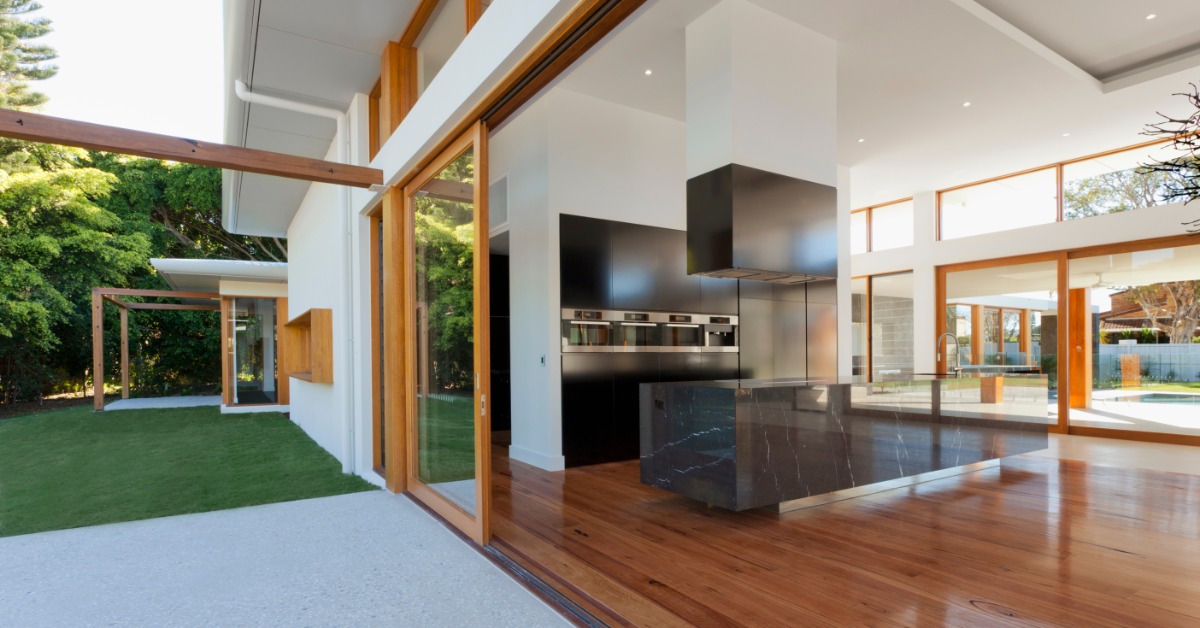
Large windows, open layouts, and strong connections to the outdoors can make a luxury home feel expansive, yet those same features can create an unexpected tension when privacy enters the picture. Covering every window or heavily screening the property may solve one concern while diminishing the qualities that made the home appealing in the first place.
For homeowners who value both seclusion and openness, designing a home that feels private, not closed off requires thinking beyond a single barrier between the interior and the outside world. Privacy can come from the way rooms, views, landscaping, lighting, and architectural details work together, allowing a home to retain its sense of space without leaving daily life unnecessarily exposed.
Start With the Views You Want To Keep
Before adding anything that blocks a sightline, consider which views contribute most to the experience of living in the home. A wall of glass overlooking a garden deserves different treatment from a window facing a neighboring driveway, even when both spaces could benefit from greater privacy.
Treating every window the same can unintentionally eliminate some of the home’s best visual connections. Preserving important views while screening less desirable ones creates a more deliberate balance, particularly when architects oriented the home around its natural surroundings. Privacy then becomes selective, protecting personal spaces without separating the entire house from its setting.
Use Distance to Create Natural Separation
Generous properties have an obvious advantage when creating privacy because physical distance can reduce exposure without requiring substantial visual barriers. Thoughtful placement of outdoor living areas and gathering spaces can make use of that distance while directing everyday activity away from neighboring properties or public areas.
Even properties with closer neighbors can create a similar effect through careful spatial planning. Positioning a seating area deeper within a patio or arranging furniture so people do not face directly toward nearby windows changes how exposed a space feels. Small adjustments to where people naturally spend their time can provide more privacy without adding another wall or covering a desirable view.
Let Landscaping Filter the View
When homeowners want more seclusion without surrounding the property with solid barriers, landscaping can interrupt unwanted sightlines while preserving a sense of depth. Trees with open canopies, ornamental grasses, climbing plants, and strategically placed shrubs can screen specific areas without making the entire yard feel hidden away.
Layering plants at different distances can make the effect feel especially natural because the landscape becomes part of the view instead of forming an abrupt boundary at its edge. A tree near a terrace might obscure a neighboring second-story window, while plantings farther into the yard can soften exposure from the street.
Careful placement matters more than simply adding as much greenery as possible. Leaving openings where homeowners want to see gardens, water, or distant scenery allows the landscape to provide privacy selectively. The property can still feel connected to its surroundings while giving outdoor living spaces a greater sense of seclusion.
Consider Privacy After the Sun Goes Down
A home that feels comfortably secluded during the day can change dramatically after sunset. Once interior lights illuminate rooms behind large windows, the contrast between a bright interior and darker surroundings may make activities inside much more visible from the exterior.
Curtains can address the problem, although closing them every evening may disconnect rooms from gardens, pools, city views, or other scenery homeowners want to enjoy. Interior lighting choices can affect the experience as well, particularly when bright fixtures near windows draw attention to spaces that felt comparatively private during daylight hours.
Because glass behaves differently as exterior and interior lighting conditions change, homeowners should consider nighttime visibility separately from daytime privacy. Anyone considering a glass treatment should understand what to know when choosing window tint for night privacy before assuming the same solution will provide identical results throughout the day.
Create Privacy Within the Floor Plan
Although conversations about residential privacy frequently focus on neighbors and passersby, the home’s interior layout can create exposure of its own. An entryway may provide a direct view into a living area, or expansive glass doors might make several connected rooms visible from a single exterior vantage point.
Redirecting those sightlines does not require abandoning an open layout. A partial wall near an entrance might limit immediate views into a family room, while furniture or a freestanding shelving unit can establish separation without closing one space behind a full wall. The goal is to decide where uninterrupted sightlines genuinely contribute to the home and where a subtle visual break makes daily life more comfortable.
Give Different Rooms Different Levels of Seclusion
Because each room supports different activities, applying the same privacy solution throughout a home can create unnecessary compromises. A living room with views for a secluded backyard may benefit from keeping its glass largely unobstructed, while a bedroom facing another property calls for greater control.
Spaces intended for entertaining may require very little intervention when their orientation already limits outside visibility. Evaluating actual exposure room by room keeps homeowners from sacrificing natural light or attractive views in spaces where heavier privacy features would accomplish very little.
Make Boundaries Part of the Design
When a property genuinely needs a physical boundary, its design can determine whether the result feels secluded or fortified. Tall solid walls can provide substantial screening, but using them throughout a property can reduce light and make outdoor spaces feel smaller.
Architectural screens, slatted panels, garden walls, and carefully positioned structures can create separation while allowing glimpses of greenery or sky to remain visible. Choosing materials that already appear elsewhere on the property can connect these features to the architecture, allowing a practical privacy element to contribute visual interest of its own.
Preserve the Openness That Makes the Home Special
When privacy decisions begin with the qualities homeowners already appreciate, greater seclusion does not have to come at the expense of openness. Heavy barriers may technically shield a property from view, yet they can erase the visual freedom and connection with the surroundings that originally made the residence distinctive.
Ultimately, designing a home that feels private without feeling closed off depends on deciding where separation truly matters and where openness deserves protection. When sightlines, landscaping, lighting, room function, and architectural boundaries respond to specific conditions around the property, privacy can become part of the home’s design without overwhelming everything else.