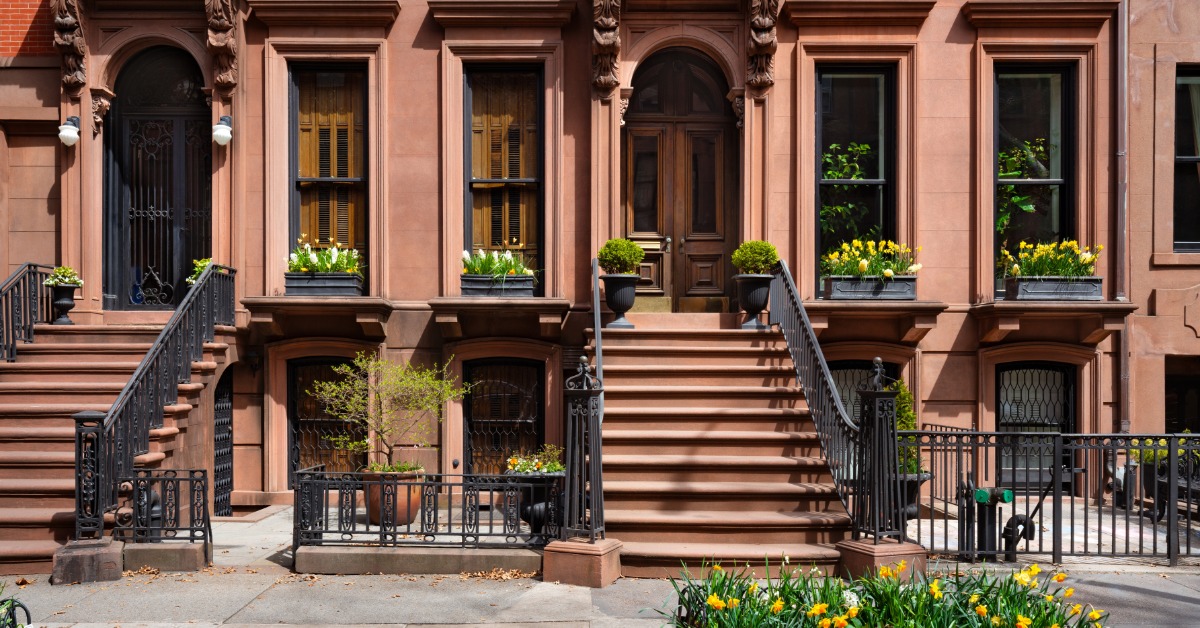
A historic brownstone often makes its first impression before a buyer reaches the front steps. The carved facade, tall parlor windows, and graceful stoop suggest permanence, privacy, and a life shaped by architectural character.
Yet the beauty of these homes can make buyers less alert to what sits behind the plaster and stone. Historic brownstones can hide structural concerns beneath restored millwork, custom cabinetry, or rooms prepared for a polished showing.
That does not make these properties poor investments. It makes careful inspection part of owning a home with history, especially when the house has passed through generations of renovations.
The Facade May Reveal Only Part of the Story
Brownstone facades create much of the appeal buyers associate with these homes. Warm sandstone, decorative lintels, and carved details give each property a distinct presence on the street.
Time can wear down that surface in ways fresh paint or patching may conceal. Water enters open joints, winter temperatures widen cracks, and older repairs may place pressure on softer original stone.
What Buyers Should Look for During a Facade Inspection
A restored facade might look flawless from the sidewalk, but a specialist should check for flaking, hollow areas, and movement around windows. Dark streaks may indicate poor drainage or moisture behind the stone. Historic sandstone requires suitable repair materials; hard cement patches can cause further damage.
Cracks Carry Their Own Meaning
Few century-old homes have perfectly straight walls. Some cracks develop as a building settles and remain stable for decades.
The location and shape of cracks are more important than their presence alone. A small plaster crack might be harmless, but stair-step cracks through masonry could indicate movement along mortar joints. Horizontal cracks should be examined carefully, especially if they widen near doorways or cross from plaster into the underlying masonry. Fresh paint can mask the true issue, so it’s important to ask if structural repairs were performed and reviewed by an engineer.
For luxury properties, keeping records such as plans, permits, and engineering reports can provide added confidence by revealing what was done behind the walls.
Moisture Often Takes the Quietest Route
Water rarely arrives through one dramatic leak. It slips through loose flashing, roof edges, cracked stone, basement walls, and rear extensions.
Once moisture reaches wood framing, it can weaken joists where they rest inside masonry pockets. Damage may remain hidden until floors sag or plaster begins to crack.
Early clues often seem minor. A musty odor, peeling paint, or a recurring stain near a window may signal a deeper problem.
Basements can reveal even more. Crumbling mortar, damp walls, and repeated coatings may show that earlier owners covered the symptom while leaving the source untouched.
A sound repair follows the path of the water. It does not rely on a fresh coat of waterproof paint to hide what remains beneath it.
Floors Can Expose Hidden Movement
Slightly sloped floors often come with older homes. In some brownstones, they reflect long-settled movement rather than active damage.
A sudden dip near a staircase tells a different story. Persistent bounce or uneven transitions between rooms can point toward weakened framing.
Signs That Call for a Structural Review
A buyer should consider an engineer when the property shows:
Floors that drop near openings or exterior walls
Wide cracks above doors or windows
Walls that lean or bow
Beams with improvised supports
Several doors that stick in the same area
One sign may have a simple explanation. Several related signs can reveal a larger pattern.
Renovations Can Change the Load Path
Brownstones evolve with each owner—parlors become kitchens, narrow rooms expand, staircases shift to improve flow. These changes can affect structural integrity; removing load-bearing elements without proper support risks weakening floors. Decorative columns might hide steel posts or unpermitted renovations.
Buyers should compare current layouts with approved plans; missing permits raise questions about structural support and design. A serene interior with open proportions may result from extensive structural work, but the process details should be documented.
Foundations Can Move Beneath Polished Rooms
Historic foundations often depend on masonry walls and footings built according to outdated standards. Over time, factors like soil moisture changes or nearby construction can impact their integrity.
The basement can offer initial signs, such as displaced bricks, uneven walls, or gaps where framing meets masonry, indicating movement. Additionally, excavation work on neighboring properties in dense city areas can affect nearby foundations if soil movement isn’t properly managed.
A structural engineer can determine whether an imperfection is a long-standing issue or due to active shifting, which is crucial information for anyone interested in a high-value property.
Party Walls Connect Neighboring Homes
Most brownstones have masonry party walls supporting framing and separating homes. Water seepage from roofs or chimneys can weaken these walls, and nearby renovations may damage masonry or affect load distribution. Signs like cracked plaster, dampness, or unusual sounds inside can indicate issues or modifications.
Although a private interior appears separate, it still depends on conditions beyond its property line. Buyers should inquire about recent roof and structural work on neighboring homes if visible damage or concerns arise.
Roofs and Roof Decks Need Separate Attention
A roof may look sound from the street but hide damaged decking or weakened rafters, with patching concealing older leaks. Low-slope roofs need clear drains and flashing, as standing water adds weight and leaks risk. Roof decks must be checked for structural support, especially when owners add them.
Parapet walls and chimneys require inspection for loose masonry that can admit water and cause hazards. An ideal roof review considers drainage, structural integrity, and all potential water entry points.
Fire Escapes Depend on the Wall Behind Them
Many historic brownstones include exterior fire escapes that have faced decades of weather. Rust and loose connections can affect how the system performs.
Paint may improve the appearance while covering corrosion. A thorough inspection should examine the attachment points, platforms, and ladders.
Owners planning repairs should understand the role of professional engineering in fire escape design. Engineers evaluate loads and connections while accounting for the condition of the wall that supports the structure.
A fire escape should not be treated separately from the facade. Weak masonry around an anchor point can affect the stability of the whole assembly.
Records Can Clarify the Home’s Past
A refined renovation may make an old home feel effortless. Buyers still need to understand what happened before the new finishes arrived.
Permit histories can reveal structural alterations, roof work, or facade repairs. Violations may also point to earlier conditions that deserve follow-up.
Ask the seller for invoices and engineering letters tied to major work. Detailed records can support confidence in a renovation while helping the next owner plan future maintenance.
Luxury often appears in the details buyers can see. Long-term value depends just as heavily on the work hidden behind them.
A Careful Review Protects the Property’s Character
The most expensive problems often sit behind attractive surfaces. That reality makes hidden concerns within historic brownstone structures worth examining before the closing date arrives.
A general inspection provides a useful first step. When cracks, moisture, movement, or past alterations raise questions, a structural engineer or preservation specialist can provide a deeper review.
Historic brownstones offer a sense of presence that few newer homes can match. Sound structure allows that character to endure without asking the next owner to inherit unanswered questions.