Picking a pool sounds fun until you get to the part where you have to compare materials. That’s where the real decision starts. Which of the four main pool materials should you choose? The answer depends on how you want the pool to look, how much upkeep fits your routine, and how custom you want the final design to be. A great pool starts with the right base.
Gunite
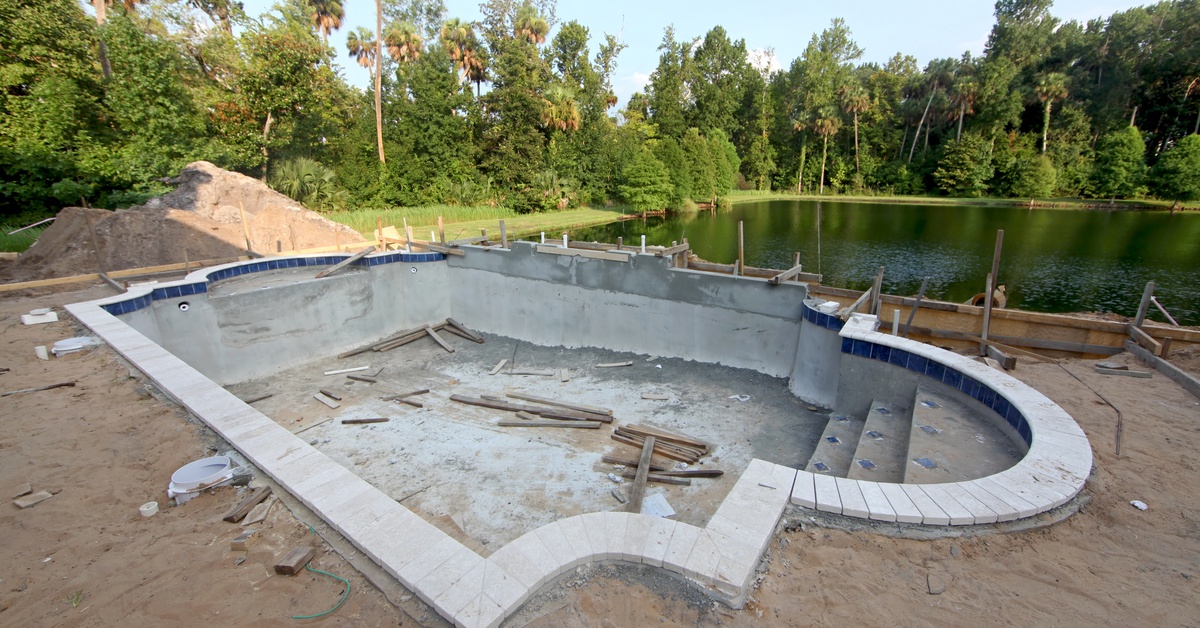
Gunite, perhaps better known as concrete or shotcrete, is another common material used in pool construction. While there are many myths and misconceptions about gunite, like rough surfaces or constant cracking, many of these are outdated; gunite is, overall, a durable, customizable option.
It’s popular in luxury settings because it works well for custom shapes, beach entries, tanning ledges, and detailed finishes. The tradeoff is time. Installation takes longer, and the surface needs more upkeep than some other materials.
Shotcrete
Shotcrete is a concrete mixture that’s sprayed into place with water already mixed in before application. That sets it apart from gunite, where the water is added at the nozzle during installation. The finished result is still a strong, durable concrete pool shell, but the application process gives builders tight control over thickness and placement.
Shotcrete works well for custom designs, deep ends, sharp lines, and detailed features common in luxury pools. The tradeoff is similar to gunite: it takes more time to build, costs more upfront, and needs ongoing surface care as the years go on.
Fiberglass
Fiberglass is a molded pool shell made from reinforced plastic and finished with a smooth gel coating. The shell is manufactured in one piece, then placed into the ground on-site. This makes it a convenient option for homeowners who want the installation completed quickly.
Other benefits of fiberglass include a smooth surface, lower day-to-day maintenance, and better resistance to algae buildup. The tradeoff comes with design flexibility, since the shape and depth depend on pre-made molds rather than a fully custom build.
Vinyl Liner
Vinyl liner pools use a custom-fit vinyl sheet that stretches across the inside of the pool structure to hold water and create the finished surface. That liner sits over a frame made from steel, polymer, or concrete panels.
This setup gives homeowners a softer surface underfoot and a lower upfront cost than some other materials. It also allows for a fair amount of design flexibility in shape and layout. The downside comes from durability. The liner can tear, wrinkle, or wear down over time, and will need replacement long before the pool structure itself.
Making The Right Call
Which of the four main pool materials should you choose? The one that fits your space, your design goals, and the kind of upkeep you want to live with year after year. Some homeowners want speed, some want full customization, and some want a balance of both. A good choice looks great on day one and still feels right long after the water goes in.